
STUDY IN AUSTRALIA

Explore New Horizons: Study in Australia
Why Study in Australia
Australia is a prime destination for students seeking a blend of excellent educational standards and a high-quality life. This vibrant country not only provides internationally recognized degrees but also an engaging environment full of cultural diversity and natural beauty.
World-Class Education System
Australia boasts a high standard of education with several universities ranked in the global top 100, providing students with a wide range of quality programs and state-of-the-art research opportunities.
Vibrant Student Life
Australia offers a dynamic lifestyle with its diverse landscapes and cosmopolitan cities. Students benefit from a balanced educational experience with ample opportunities for outdoor activities, cultural exchanges, and a friendly, inclusive atmosphere.
Discover Innovation and Adventure: Study in Australia
More Info
Explore the key steps to launch your academic path in Australia, including choosing the perfect course, managing visa procedures, and adjusting to life.
- Benefits
- Courses & Universities
- Requirements
- Intakes in Australia
- Cost
- Scholarships
- Living Expenses
Benefits
Australia is home to globally recognized universities that provide a diverse range of courses and cutting-edge research facilities. Students benefit from a practical approach to education that encourages innovative thinking and professional preparedness. The pleasant climate, stunning natural landscapes, and vibrant city life also contribute to making Australia an attractive destination for pursuing higher education.
- Internationally acclaimed education system
- Multicultural society enriches student experience
- Innovative research facilities across disciplines
- High standards of living and safety for students
- Opportunities for career advancement post-study
Courses & Universities
Here are some of the most popular academic fields that attract international students to pursue higher education in Australia:
- Engineering
- Business Analytics
- MBA (Masters of Business Administration)
- Life Sciences
- Artificial Intelligence (AI)
- Social Sciences
- Medicine
Top Universities to Study in Australia
S.No. | Institution | QS Ranking 2024 (Globally) |
1 | The University of Melbourne | 14 |
2 | The University of New South Wales (UNSW Sydney) | 19 |
3 | The University of Sydney | 19 |
4 | Australian National University (ANU) | 34 |
5 | Monash University | 42 |
6 | The University of Queensland | 43 |
7 | The University of Western Australia | 72 |
8 | The University of Adelaide | 89 |
9 | University of Technology Sydney | 90 |
10 | Macquarie University (Sydney, Australia) | 130 |
Requirements
It's important to note that student visa requirements can vary, so always check the Australian government’s official website for the most current information.
Below is an updated summary of what you need to apply for a student visa to study in Australia:
- A valid passport
- Payment for the visa application fee
- Confirmation of Enrolment (CoE)
- Genuine Temporary Entrant (GTE) Statement
- Evidence of English proficiency, such as IELTS scores
- Proof of sufficient funds for tuition, living costs, dependent expenses, and return travel
- Details about your Overseas Student Health Cover (OSHC)
- Relevant academic and work experience documents
- Passport-sized photos
Admission Intakes Available in Australia
Australian colleges and universities typically have two main enrolment periods each year, commonly termed as semesters.
The primary intakes in Australia are:
Semester 1: Begins in late February or early March.
Semester 2: Commences in late July or early August.
To ensure timely processing, it is advisable to begin your application approximately six months prior to the deadline.
Cost
The cost of tuition in Australia depends on the type of program you choose, the city, and the specific university or school. Generally, tuition fees are higher for postgraduate and doctoral programs compared to undergraduate programs. Below is a breakdown of average tuition fees for various educational programs in Australia:
- Undergraduate Bachelor Degree: Between $18,000 and $40,000 per year
- Postgraduate Master’s Degree: Between $20,000 and $46,000 per year
- Doctoral Degree: Between $20,000 and $42,000 per year
- Vocational Education and Training: Between $4,000 and $22,000 per year
- English Language Studies: Between $350 and $450 per week
Keep in mind that these figures are estimates and can vary significantly. To help manage costs, consider exploring scholarship opportunities which can greatly reduce your tuition expenses.
Scholarships
As an Indian student looking to study in Australia, you have access to several notable scholarship programs to help support your education:
- Australia Awards
- Endeavour Postgraduate Scholarship
- International Postgraduate Research Scholarship (IPRS)
- Destination Australia
- Australia APEC Women in Research Fellowship
- Indian Business and Community Scholarship
Living Expenses
Considering the cost of living is crucial when deciding to study abroad.
Below is an overview of the typical living expenses for an international student in Australia.
Living expenses | Weekly budget in AUD$ (indicative) |
Accommodation | $100 – $250 |
Groceries and eating out | $140 to $280 |
Gas, electricity | $10 to $20 |
Phone and Internet | $15 to $30 |
Public transport | $35 to $70 |
Car (after purchase) | $150 to $260 |
Entertainment | $80 to $150 |
Lifestyle expenses | $80–150 |
Please note that these figures are estimates and can vary.
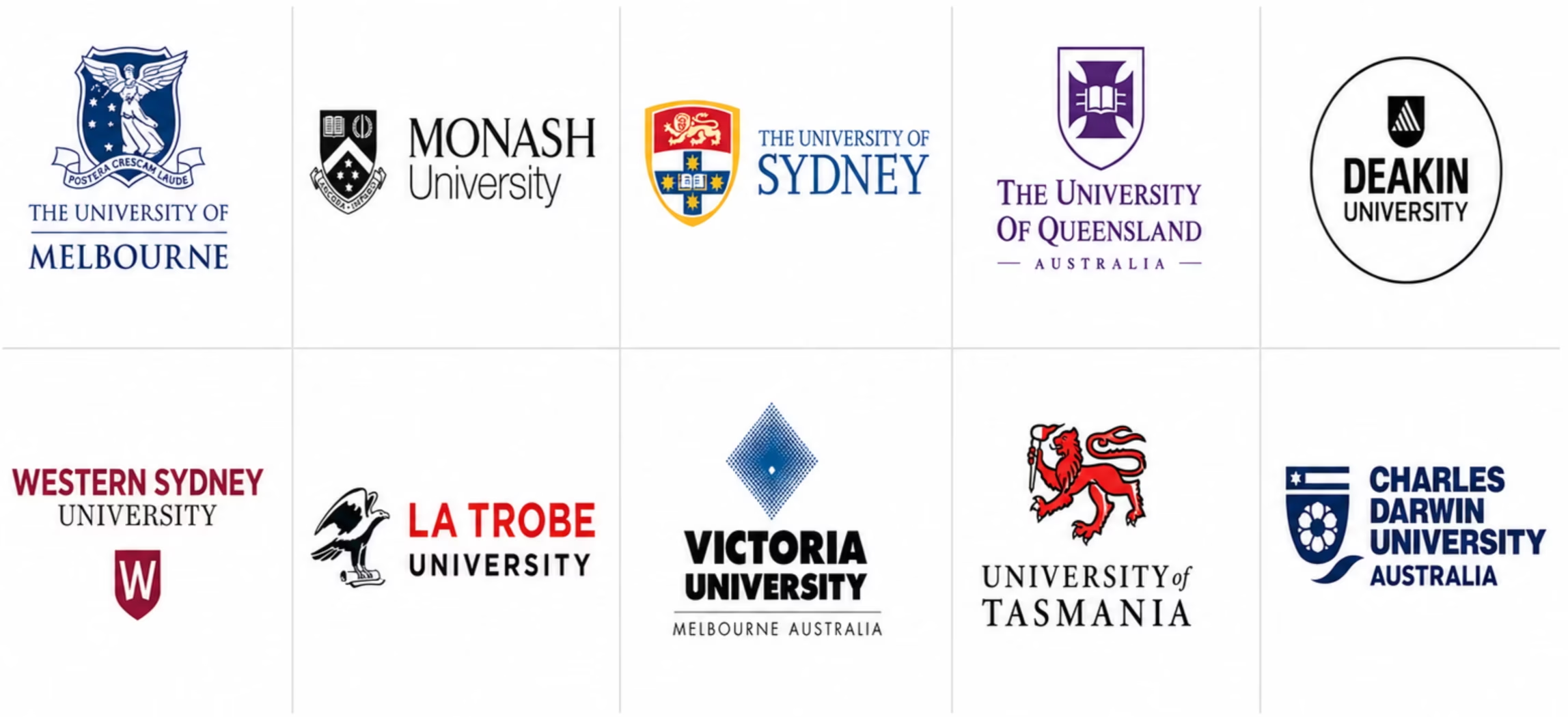
Best Universities in the Australia for Indian Students
QUESTIONS / ANSWERS
Frequently asked questions
International students are required to obtain Overseas Student Health Cover (OSHC) to access healthcare services.
Yes, part-time jobs are widely available in sectors like retail, hospitality, and administration, especially in larger cities.
Students can choose from on-campus housing, private rentals, or homestays.
Yes, Australia's location offers great opportunities for travel both within the country and to nearby destinations like New Zealand and Southeast Asia.
Most universities have international student associations and clubs that make it easy to connect with peers from around the world.
Most universities offer various academic support services including tutoring, workshops, and writing help centres.