
STUDY IN GERMANY

Explore Excellence – Study in Germany.
Why Study in Germany
Discover the pinnacle of education by studying in Germany, a hub for innovation and academic excellence. From world-renowned universities to groundbreaking research opportunities, Germany offers a unique blend of rigorous education and cultural enrichment, making it a prime destination for students from around the globe.
No Fees at Public Universities
Germany offers a unique opportunity to study at public universities without tuition fees, which applies to both domestic and international students, making higher education accessible and affordable.
Strong Focus on Research
German universities are at the forefront of technological and scientific research, offering students state-of-the-art facilities and the opportunity to work alongside leading scholars and researchers.
Unlock Your Potential with World-Class Education in Germany
More Info
Learn what you need to know to start your educational experience in Germany, from identifying the appropriate academic program to navigating the visa process and integrating into German culture.
- Benefits
- Courses & Universities
- Requirements
- Intakes in Germany
- Cost
- Scholarships
- Living Expenses
Benefits
Studying in Germany not only significantly reduces your educational expenses but also provides a rigorous academic environment with a wide range of study options. Students gain from Germany's strong economy and central location in Europe, which offers abundant career opportunities and easy access to travel throughout the continent.
- World-class universities
- Affordable tuition fees
- Extensive research opportunities
- Cultural and historical richness
- Vibrant student life
- Multilingual education environment
Courses & Universities
Germany has increasingly become a renowned hub for superior education, attracting a growing number of international students to its undergraduate and postgraduate programs.
- Engineering and Technology programs
- Business and Management studies
- Medicine and healthcare-related courses
- Computer Science and Information Technology
- Environmental Sciences and Renewable Energy
- Mathematics and Natural Sciences
- Language and Cultural Studies
- Economics and Finance programs
It's important to note that the popularity of these courses can fluctuate based on individual preferences and evolving trends in the global education landscape.
Top Universities to Study in Germany
Below are the highest-ranked German universities in the QS World University Rankings for 2024.
S.No. | Institution | QS Ranking 2024 (Globally) |
1 | Ludwig-Maximilians-Universität München | 48 |
2 | Universität Heidelberg | 87 |
3 | Freie Universitaet Berlin | 98 |
4 | RWTH Aachen University | 106 |
5 | KIT, Karlsruhe Institute of Technology | 119 |
6 | Humboldt-Universität zu Berlin | 120 |
7 | Technische Universität Berlin (TU Berlin) | 154 |
8 | Albert-Ludwigs-Universitaet Freiburg | 192 |
9 | Universität Hamburg | 205 |
10 | Eberhard Karls Universität Tübingen | 213 |
Requirements
When applying for a German student visa, you must compile and submit several essential documents to fulfil the requirements:
- Valid passport plus two photocopies
- Fully completed and signed visa application
- Recent passport-style photographs
- Letter of commitment and proof of financial assets
- Scholarship grant certificate (if applicable)
- Proof of university acceptance
- Evidence of previous education
- Original high school graduation certificate
- Degree completion certificate (for Master's/Ph.D. applicants)
- Student health insurance documentation
- English proficiency test results (IELTS, TOEFL, PTE)
- German language proficiency certificate (for German-taught programs)
Academic Intakes in German Universities
German universities offer two primary intakes for prospective students, each with specific application deadlines:
- Summer Semester: Running from March to August, the application deadline for this semester is January 15th annually.
- Winter Semester: Typically extending from September to February, or in some cases, October to March. Applications for this semester should be submitted by July 15th each year.
These intakes are critical for planning your application process, ensuring you meet all deadlines and requirements for your chosen study period in Germany.
Cost
In Germany, most public universities do not charge tuition fees for both domestic and international students, though there are exceptions for specific professional courses. However, students are required to pay a semester administration fee, which ranges from €100 to €350. This fee generally covers enrollment and other administrative costs. Doctoral programs at public universities typically do not have tuition fees.
For specialized programs like MBAs, medical degrees, and other professional studies, the costs tend to be higher. Below is an outline of the expected annual fees for various programs at public universities in Germany:
- Vocational/Diploma courses: €300
- Bachelor's programs: €300
- Master's programs: €300
- MS programs: €300 to €28,000
- PhD programs: €300 to €3,000
In contrast, private universities in Germany charge significantly higher tuition fees. A Bachelor’s degree can cost up to €26,000 per year, and a Master’s degree can go up to €40,000 per year.
Scholarships
As an Indian student interested in studying in Germany, there are several scholarship options available to help manage the costs. Key scholarships include:
- DAAD Scholarships
- KAAD Scholarships
- Deutschland Stipendium
- Erasmus+ Scholarships
- Friedrich Ebert Foundation Scholarships
Each scholarship has its own set of eligibility requirements and application procedures. It is advisable to check the official scholarship websites or consult the German Embassy or Consulate in India for detailed information and guidance on applications.
Living Expenses
Living costs in Germany can fluctuate greatly based on the city, individual lifestyle, and personal preferences. Below is a breakdown of the average monthly expenses one might encounter:
- Accommodation: Ranges from €250 to €400.
- Utilities: Typically costs between €100 and €200.
- Food: Generally, between €170 and €200.
- Transportation: Can vary widely from €25 to €200.
- Phone and Internet: Usually costs between €15 and €30.
- Entertainment: Expenses can range from €80 to €150.
- Fitness: Approximately €30.
- Miscellaneous: Can be anywhere from €40 to €100.
Please note that these figures are approximations and can vary significantly depending on where you choose to live and your personal spending habits.
Best Universities in the Germany for Indian Students
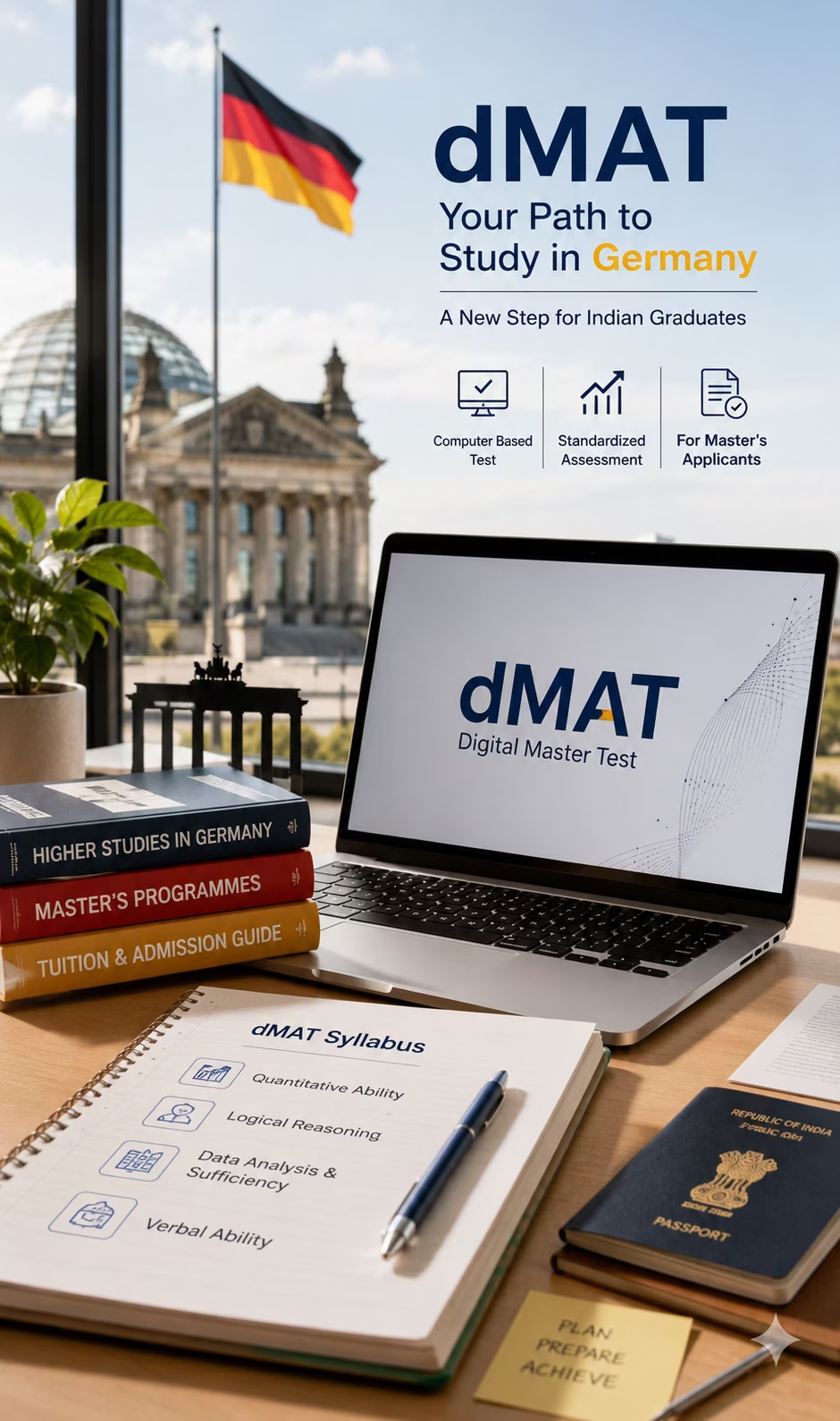
dMAT for Germany 2026 – Digital Master Assessment Test for Indian Students
Complete APS Requirement for Master's Admission
Planning to pursue a Master’s in Germany? The Digital Master Assessment Test (dMAT) is a new requirement introduced as part of the APS Certificate verification process for eligible Indian students applying to German universities.
Starting from 2026, selected applicants applying for Master’s programs in Germany will need to complete the dMAT (Digital Master Assessment Test) along with their APS verification before submitting university applications.
At Square One Overseas, we help students understand the complete Germany admission process, including APS Certificate, dMAT registration, university applications, student visa assistance, and admission guidance.
What is dMAT?
The Digital Master Assessment Test (dMAT) is a standardized aptitude examination designed to evaluate whether applicants possess the analytical, reasoning, and academic problem-solving skills required for graduate-level education in Germany.
Unlike traditional entrance examinations, dMAT does not test memorized theory. Instead, it measures your ability to:
- Think analytically
- Solve academic problems
- Apply logical reasoning
- Interpret data
- Make evidence-based decisions
- Handle university-level academic scenarios
The examination has been developed specifically for students applying to Master’s programs in Germany.
Why Has Germany Introduced dMAT?
Germany receives thousands of applications from Indian graduates every year. To ensure fair and transparent admissions, the Academic Evaluation Centre (APS India) has introduced dMAT as an additional verification component for selected academic disciplines.
The test helps German universities evaluate students using a common academic benchmark while supporting a smoother admissions process.
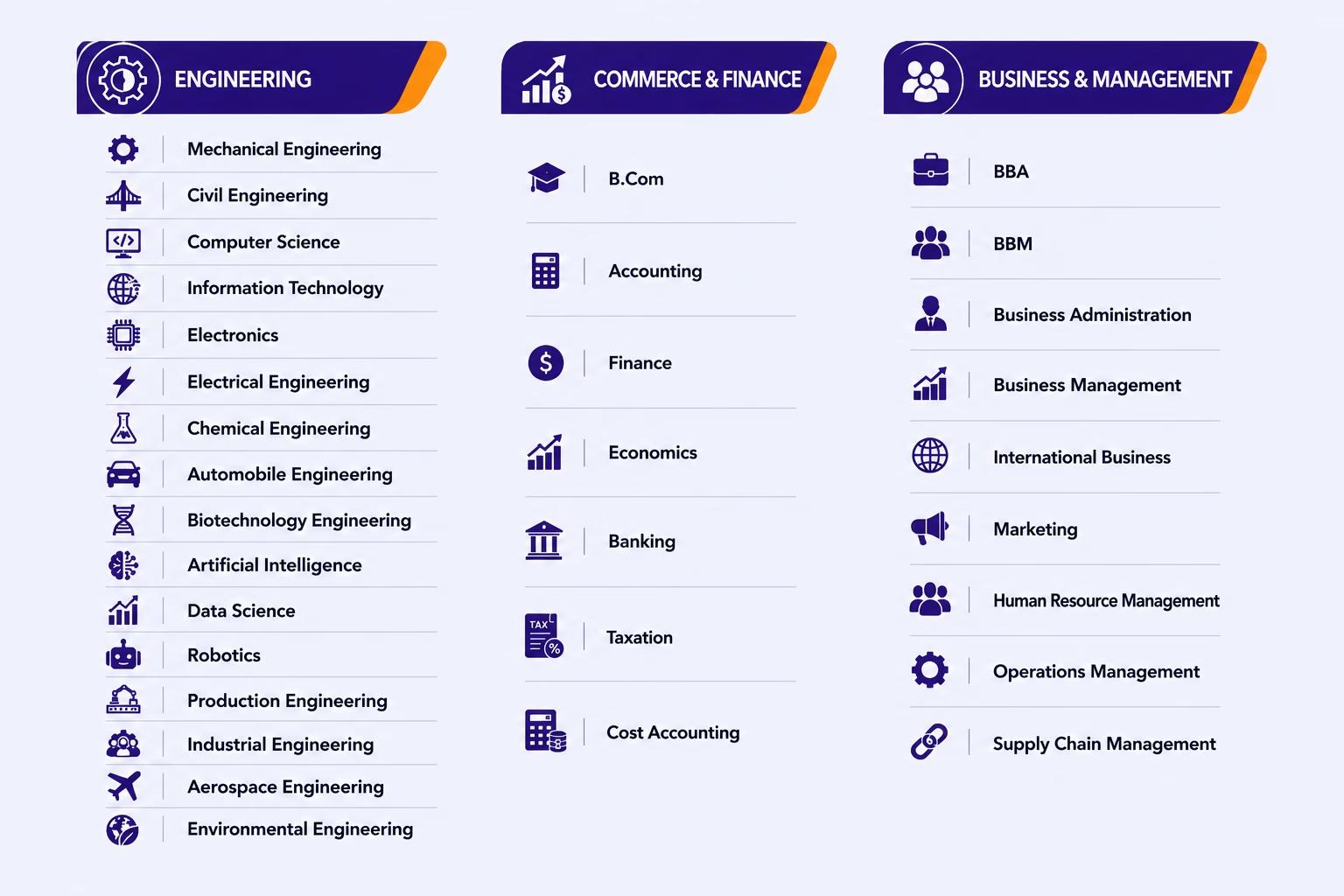
Eligible Degree Streams
Who Needs to Take dMAT?
The dMAT requirement currently applies only to Indian students who:
- Are applying for a Master’s degree in Germany
- Require an APS Certificate
- Have completed their bachelor’s degree in specific academic disciplines
- Plan to study in Summer Intake 2027 or later
Who Does Not Need dMAT?
Students from other academic disciplines that are currently not included in the APS dMAT requirement may continue with the standard APS verification process.
Applicants should always verify the latest APS guidelines before applying.
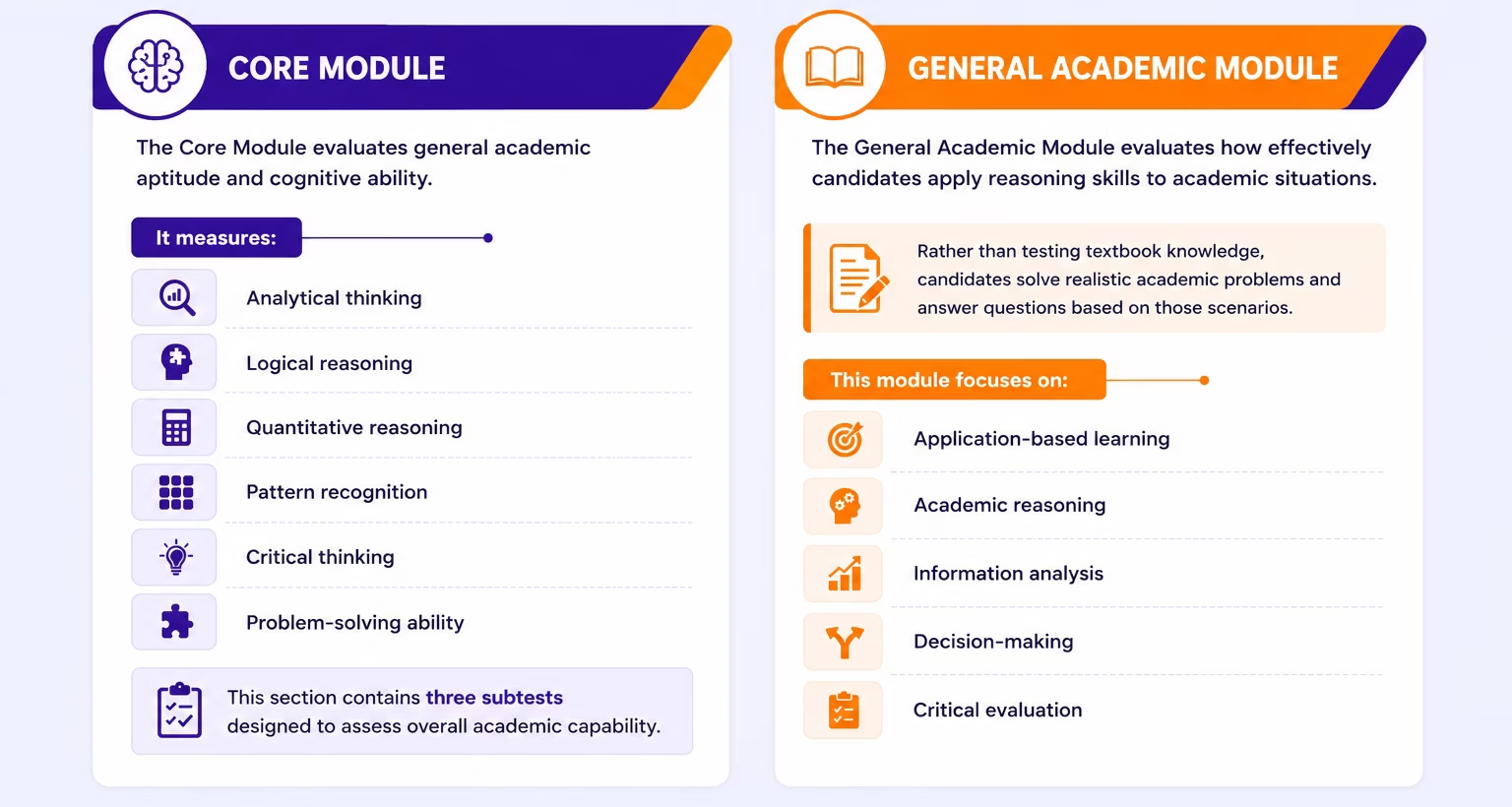
dMAT Exam Structure
The Digital Master Assessment Test consists of two sections.
How to Prepare for dMAT
Effective preparation focuses on strengthening analytical and reasoning abilities.
Students are advised to practice:

Logical reasoning

Quantitative aptitude

Critical thinking

Data interpretation

Analytical problem solving

Reading comprehension

Academic case-based questions

dMAT Registration Process
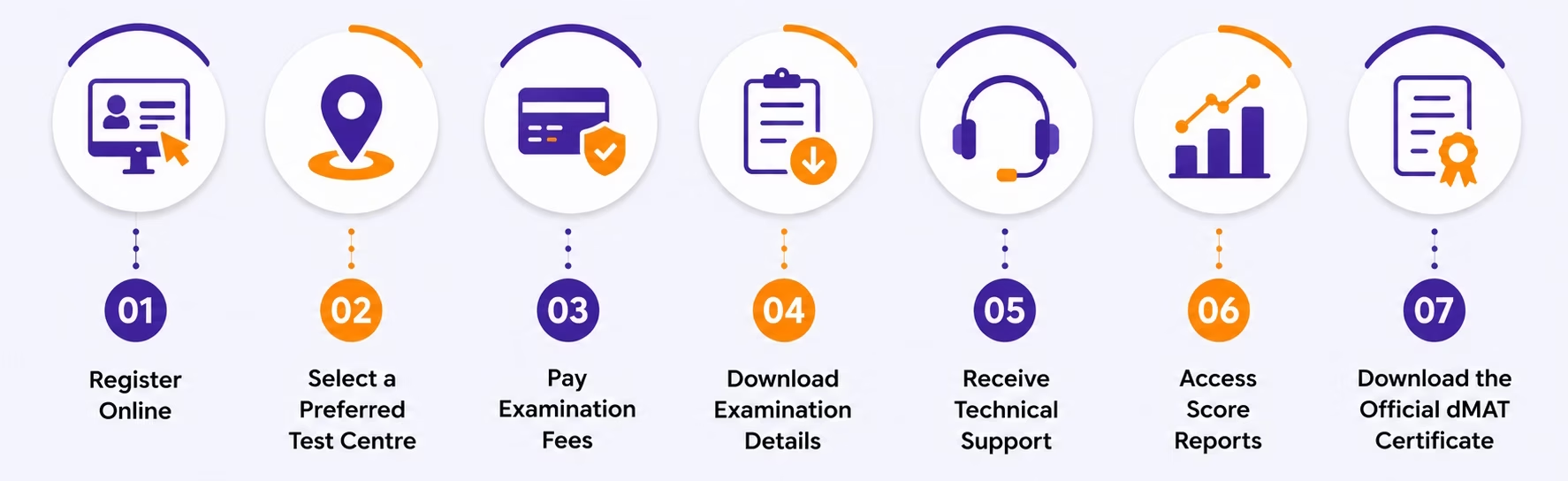
dMAT Test Schedule 2026
| Event | Date |
|---|---|
| Registration Opens | 29 June 2026 |
| Registration Deadline | 15 September 2026 |
| dMAT Examination | 26 September 2026 |
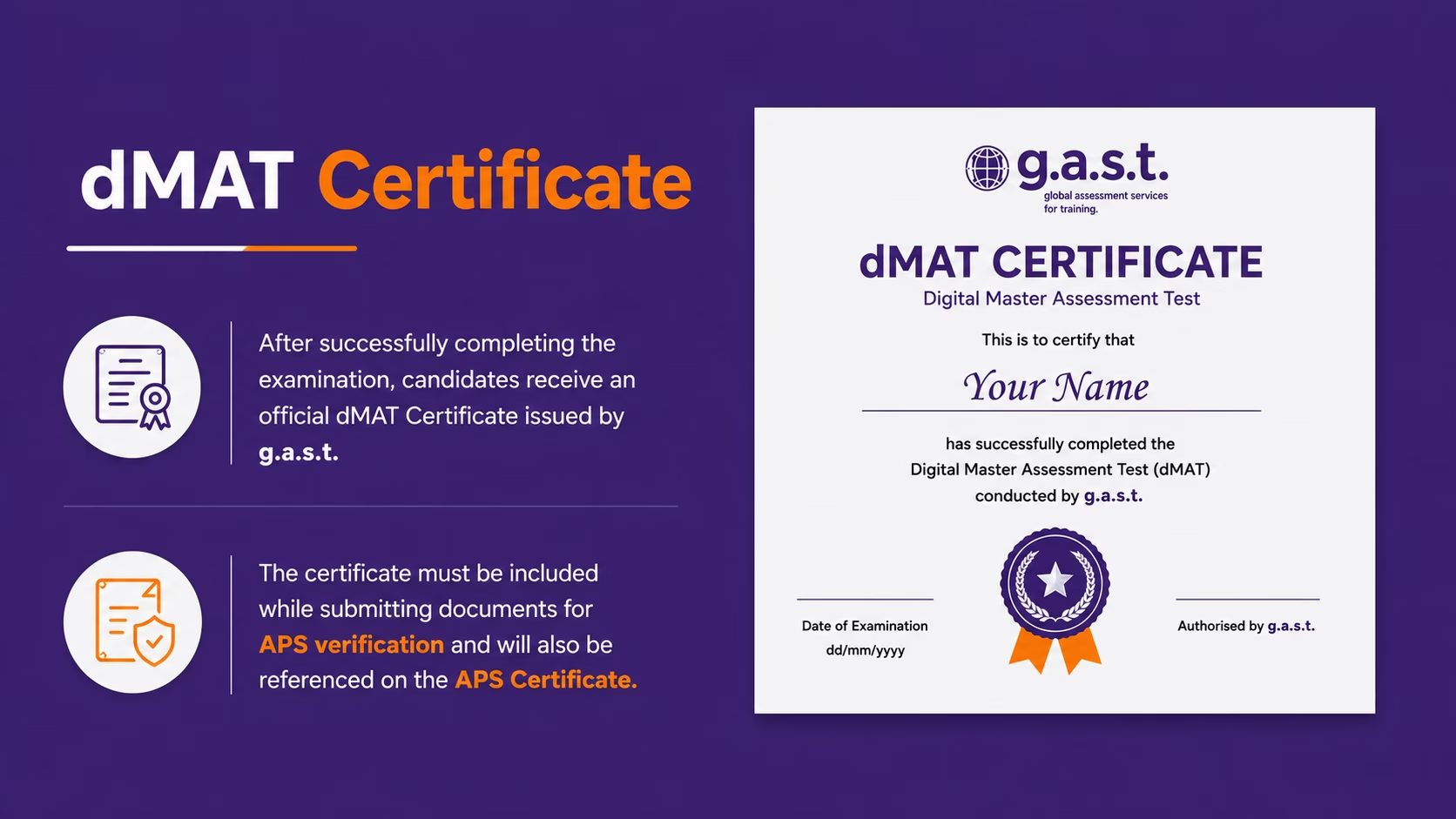
| Result & Certificate Release | 12 October 2026 |
dMAT Test Centres in India
QUESTIONS / ANSWERS
Frequently asked questions
Start by searching for Master's programs based on your preferred subject and language of instruction.
Once you find potential courses, check the curriculum, academic requirements, required Bachelor's
subjects or credits, language requirements, application deadlines, and application process.
Check the university's academic requirements, required Bachelor's subjects or ECTS credits,
language requirements, application deadlines, document requirements, and application procedure.
Some German Masters programs have very specific subject prerequisites, so meeting the general degree
requirement may not be enough.
APS stands for Academic Evaluation Centre. It is an academic document verification process
applicable to students from certain countries, including India, who plan to study in Germany.
If APS applies to you, it is important to understand the process and plan it well in advance, as it can
affect your overall university application and visa timeline.
Focus on programs where your academic background and Bachelor's subjects match the eligibility
requirements. Check the university's grading criteria, required credits or modules, language
requirements, and any additional admission conditions rather than looking at your overall percentage
alone.
You may still have options, but requirements vary between universities and programs. Check whether
your preferred university has specific requirements relating to completed subjects, academic
performance, failed attempts, or minimum grades. Your complete transcript and subject-wise
academic background can be important.
Yes. You can start researching and shortlisting suitable programs before taking IELTS/PTE. First
understand the English-language requirement for your preferred courses and then plan your test
preparation around the required score.