How much does it cost to live abroad while studying MBBS?
The cost of living abroad while studying MBBS depends on the country, university, accommodation type and lifestyle. For Indian students, estimated monthly living expenses can range from approximately ₹15,000–₹25,000 in some Central Asian destinations to ₹50,000–₹1,00,000 or more in higher-cost destinations. Students should budget for accommodation, food, local transport, health insurance, study materials and personal expenses, while checking which facilities are included in university fees.
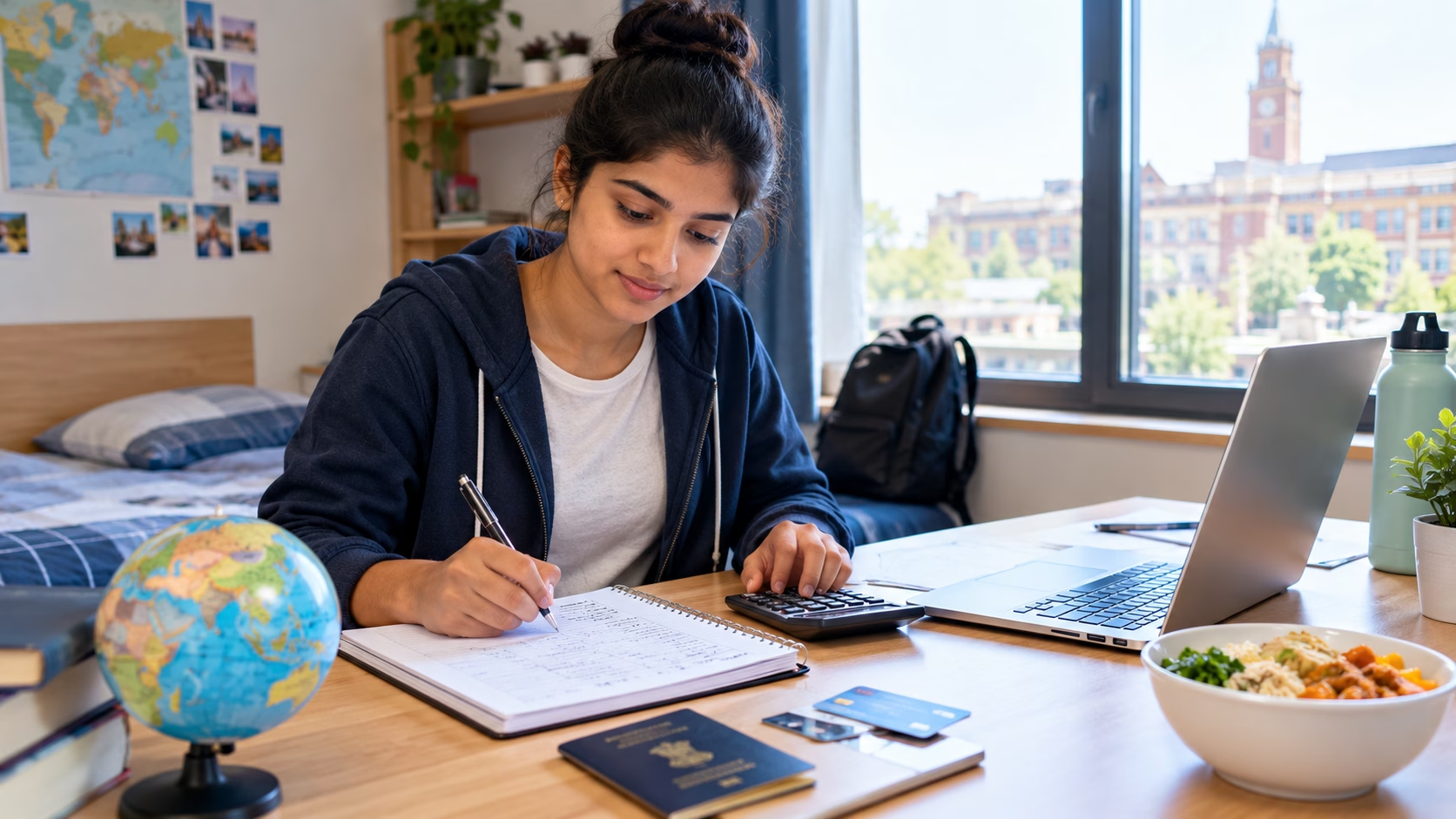
Studying MBBS abroad involves more than paying university tuition fees. Indian students and their families also need to plan for accommodation, groceries, meals, transportation, health insurance, internet, academic supplies and everyday personal expenses.
Understanding the MBBS abroad cost of living in 2026 helps students compare destinations, prepare a realistic budget and avoid unexpected financial pressure during their medical education.
Countries such as Russia, Kazakhstan, Kyrgyzstan and Uzbekistan are often considered by Indian students exploring affordable medical education abroad. However, living expenses vary significantly between cities, universities and student lifestyles. A university with lower tuition fees may not necessarily have the lowest overall cost once accommodation and other expenses are included.
This guide explains the main expenses, country-wise monthly estimates, budgeting tips and important factors Indian students should consider before choosing an MBBS destination.
1. What are the monthly living expenses for MBBS students abroad?
Monthly living expenses generally include five major categories:
-
Accommodation: University hostel fees, private rooms, shared apartments and utilities.
-
Food: Groceries, mess charges, dining out and occasional Indian food.
-
Transportation: Public transport, university shuttles, taxis and local travel.
-
Insurance and healthcare: Student medical insurance, prescriptions and healthcare costs not covered by insurance.
-
Miscellaneous expenses: Mobile recharge, internet, laundry, stationery, clothing and personal purchases.
The following are indicative planning estimates for 2026, not verified university quotations or guaranteed country averages. Actual expenses should be checked against the latest university fee schedules and local prices.
2. MBBS abroad cost of living 2026: Country-wise comparison
Indicative monthly budgets for Indian students. INR amounts are approximate planning ranges, not live exchange-rate conversions.
|
Country |
Estimated monthly living expenses |
|---|---|
|
Kyrgyzstan |
₹15,000–₹25,000 |
|
Uzbekistan |
₹18,000–₹30,000 |
|
Kazakhstan |
₹20,000–₹35,000 |
|
Russia |
₹20,000–₹45,000 |
|
Georgia |
₹35,000–₹65,000 |
|
China |
₹30,000–₹65,000 |
|
Philippines |
₹30,000–₹60,000 |
These ranges are broad estimates for budgeting. They can change with the city, accommodation arrangements, food choices, exchange rates and university-provided facilities. They should not be interpreted as a verified ranking of affordability.
Kyrgyzstan: What should MBBS students budget?
Kyrgyzstan is a destination Indian students may consider when comparing medical education costs. Monthly expenses depend on the city, hostel facilities and whether students cook or eat at a university mess.
Typical planning categories include:
-
Accommodation: Hostel or shared-room charges.
-
Food: Groceries, university meals and occasional dining out.
-
Transport: Public transport and local commuting.
-
Other costs: Internet, laundry, stationery and personal items.
Students should confirm whether hostel accommodation includes heating, electricity, water and internet, particularly when budgeting for winter.
Uzbekistan: How much does student living cost?
Uzbekistan’s living expenses depend on the university location and housing arrangement. Students living near campus may spend less on transportation, while private accommodation and frequent dining out can increase their monthly budget.
Before admission, ask the university for its current hostel tariff, meal arrangements, utility charges and any compulsory student insurance requirements.
Kazakhstan: What are the living expenses?
Living costs in Kazakhstan vary between cities and individual student arrangements. Students should consider seasonal clothing, heating, transportation and the distance between accommodation and the medical university.
A practical budget should account for both recurring monthly expenses and one-time purchases, such as winter clothing, bedding and basic household supplies.
Russia: What is the monthly budget for Indian students?
Russia has substantial regional variation in living expenses. The cost of accommodation, transport and food can differ considerably between major cities and smaller university towns.
Students should also consider seasonal expenses, particularly winter clothing and heating arrangements, and confirm the payment methods available for tuition and everyday expenses.
Georgia, China and the Philippines: What additional costs should students consider?
In Georgia, private accommodation and city living can contribute significantly to expenses. In China, costs differ by city and university accommodation arrangements. In the Philippines, accommodation, local commuting and food choices can vary by location.
For all three destinations, students should obtain a university-specific cost sheet rather than relying only on national estimates.
3. What is the MBBS abroad accommodation cost?
Accommodation is one of the most important parts of a student’s monthly budget. The total cost depends on whether the student chooses a university hostel, a shared apartment or private accommodation.
University hostel
University hostels may offer furnished rooms, campus proximity and access to shared facilities. Some universities also provide meals or utilities as part of a package.
Check: Room occupancy, heating, security, internet, laundry and whether charges are annual or monthly.
Shared apartment
Sharing a rented apartment with classmates can provide more independence and access to a kitchen. Rent, utilities and internet can be divided among roommates.
Check: Deposit, lease duration, location, utility bills and landlord requirements.
Private accommodation
A private room or studio offers greater privacy, but usually involves higher rent and additional expenses for utilities, furnishings and household supplies.
Check: Total monthly rent, advance deposit, maintenance charges and commute to the university.
Which accommodation costs should you calculate?
|
Expense |
What to include |
|---|---|
|
Rent or hostel fee |
Monthly or annual accommodation charges |
|
Electricity and heating |
Especially important in colder destinations |
|
Water and maintenance |
Check whether included in rent |
|
Internet |
Hostel Wi-Fi or personal connection |
|
Deposit |
One-time payment for private rentals |
|
Laundry |
Self-service or paid laundry facilities |
Expert tip: Ask for the accommodation fee in writing and confirm whether it is guaranteed for the entire academic year. A low advertised hostel price may exclude utilities, meals or other compulsory charges.
4. How much are food expenses for MBBS students abroad?
Food expenses depend on whether students use a university mess, cook at home, purchase groceries or regularly eat outside.
For Indian students, food planning also involves availability of vegetarian ingredients, familiar staples and access to cooking facilities.
Common food arrangements
-
University mess: Convenient for students who prefer scheduled meals, but menus and meal charges differ.
-
Self-cooking: Useful for students who want more control over ingredients, portions and food preferences.
-
Eating out: Convenient occasionally, but frequent restaurant meals can increase spending.
-
Indian grocery shopping: Specialty spices, snacks and familiar packaged foods may cost more or be less readily available.
How to manage food expenses
-
Check whether the university has a mess or meal plan and request a sample weekly menu.
-
Identify nearby supermarkets and grocery stores before choosing accommodation.
-
Compare the cost of cooking with the cost of university meals.
-
Plan weekly grocery shopping and prepare meals in batches.
-
Keep a separate allowance for occasional dining out and specialty ingredients.
Students with specific dietary preferences should confirm local food availability and kitchen access before making accommodation decisions.
5. What are the transportation expenses for medical students abroad?
Transportation costs depend on the distance between the hostel, university, hospital and essential services.
Medical students may have to travel to affiliated hospitals for clinical training, so checking the location of clinical facilities is important, not just the main campus.
|
Transport option |
Main budgeting consideration |
|---|---|
|
Walking |
Convenient if accommodation is close to campus |
|
Public transport |
Monthly passes, student discounts and route coverage |
|
University shuttle |
Availability, timetable and any separate charges |
|
Taxi or ride-hailing |
Useful occasionally, but potentially expensive |
|
Intercity travel |
Trips during holidays and academic breaks |
Practical advice: Ask the university whether clinical rotations take place at a separate hospital and whether transport is provided. A hostel near the lecture campus may not necessarily be near the teaching hospital.
6. Do MBBS students abroad need health insurance?
Health insurance requirements vary by country, university and immigration rules. Some universities arrange compulsory student insurance, while others require students to purchase an approved policy.
Before travelling, students should verify:
-
Whether insurance is compulsory for enrolment or residence permits.
-
The policy’s coverage period and geographical limits.
-
Emergency care, hospitalisation and outpatient coverage.
-
Exclusions, waiting periods and reimbursement procedures.
-
Whether the policy is accepted by the university and local authorities.
Students should also budget for medicines, routine healthcare and any expenses not covered by their policy. Do not assume that all medical costs will be included in tuition or hostel fees.
7. What other expenses should Indian students include?
Beyond rent, food and transportation, several smaller expenses can make a meaningful difference to the overall budget.
|
Expense |
Examples |
|---|---|
|
Mobile and internet |
SIM card, data plan, Wi-Fi |
|
Academic supplies |
Textbooks, stationery, printing |
|
Laundry |
Washing, drying and occasional ironing |
|
Personal care |
Toiletries, grooming and everyday essentials |
|
Clothing |
Seasonal clothing, footwear and uniforms |
|
Banking |
Currency conversion, transfer or card charges |
|
Social activities |
Occasional outings and student events |
|
Emergency fund |
Unexpected travel, repairs or medical costs |
One-time arrival costs should be budgeted separately. These can include flight tickets, visa-related payments, document preparation, initial accommodation deposits, bedding and basic household items.
8. How much money should students keep for the first month?
The first month can cost more than a typical month because students may need to pay deposits, purchase essentials and arrange local services.
A useful arrival budget should include:
-
Initial hostel or rental payment.
-
Accommodation deposit, if applicable.
-
Food and groceries for the first few weeks.
-
SIM card and internet setup.
-
Local transport and airport transfer.
-
Bedding, clothing and basic household items.
-
Emergency cash or accessible funds.
Planning recommendation
Keep the first-month budget separate from the recurring monthly budget. Also maintain an emergency reserve that is accessible without relying on an international transfer arriving immediately.
9. How can students calculate the total cost of living for the MBBS course?
Students should calculate both monthly expenses and annual or one-time payments.
A simple budgeting formula is:
For example, a student estimating ₹25,000 per month for 12 months would plan ₹3,00,000 for recurring living expenses, before adding arrival costs, insurance not already included, travel and emergency savings.
10. What should students check before selecting an MBBS university abroad?
Living expenses should be considered alongside university recognition, clinical training arrangements, academic requirements and the applicable regulations for Indian students.
Before making a decision, verify:
-
University and course eligibility: Check the applicable National Medical Commission (NMC) rules, including the Foreign Medical Graduate Licentiate Regulations, 2021, and subsequent official updates.
-
Course duration and internship: Confirm the actual duration, clinical training structure and internship arrangements.
-
Medium of instruction: Verify the teaching language and the language required for clinical interactions.
-
Hospital affiliations: Confirm where clinical training takes place and how students reach those hospitals.
-
Complete fee structure: Obtain tuition, hostel, insurance, registration and other compulsory charges in writing.
-
Student support: Check accommodation support, international student services and emergency assistance.
A low living-cost estimate should never replace verification of the university’s suitability and the student’s eligibility to practise medicine in India.
11. Expert tips to reduce MBBS abroad living expenses
Choose accommodation based on total cost
Compare rent, utilities, transport and deposits together. A cheaper apartment far from campus may cost more once commuting is included.
Plan meals in advance
Compare university meal plans with grocery prices and check whether the accommodation has a usable kitchen.
Use student transport facilities
Ask about student discounts, campus shuttles and travel arrangements for hospital postings.
Track expenses every week
Record spending on food, transport and personal items. Weekly tracking makes it easier to identify where the budget is increasing.
Plan for currency fluctuations
Keep a buffer for exchange-rate changes, bank charges and international transfers. Recheck the INR equivalent when arranging payments.
12. What common budgeting mistakes should MBBS students avoid?
-
Looking only at tuition fees: The total cost also includes accommodation, food, travel, insurance and other expenses.
-
Assuming the hostel fee covers everything: Utilities, laundry, meals and internet may be billed separately.
-
Ignoring seasonal expenses: Heating and winter clothing can materially affect costs in colder destinations.
-
Underestimating clinical travel: Teaching hospitals may be located away from the main campus.
-
Using outdated exchange rates: The INR equivalent of fees and everyday expenses can change.
-
Ignoring initial expenses: Deposits, flights and settling-in purchases can make the first month more expensive.
-
Relying on another student’s budget: Students can have very different accommodation arrangements, lifestyles and university fee packages.
A university-specific, written estimate is more useful than a general social-media claim about how much it costs to live in a particular country.
13. How should parents and students plan the MBBS abroad budget?
Parents and students can prepare a shared financial plan before paying an admission deposit.
|
Planning stage |
Action |
|---|---|
|
Before shortlisting |
Compare tuition, estimated living costs and university locations |
|
Before admission |
Obtain official tuition, hostel and compulsory fee schedules |
|
Before visa application |
Check proof-of-funds and insurance requirements |
|
Before departure |
Budget for travel, deposits and initial purchases |
|
During the course |
Track monthly expenses and review the budget each semester |
It is also useful to agree on how living expenses will be transferred, who will manage payments, and what to do if a transfer is delayed or an unexpected expense arises.
Plan your MBBS abroad budget before admission
The cost of living is an important part of planning MBBS abroad in 2026. Accommodation, food, transport, insurance and personal expenses can vary substantially between countries, cities and universities.
Indian students should compare the complete financial commitment rather than relying on a single monthly estimate. Request official fee schedules, verify hostel arrangements, understand the clinical training locations and maintain a realistic emergency reserve.
Planning to study MBBS abroad?
Compare destinations, understand the admission process and prepare your financial plan with guidance from SquareOne Overseas.
Get assistance with university shortlisting, admission requirements, documentation and planning for your overseas medical education.